
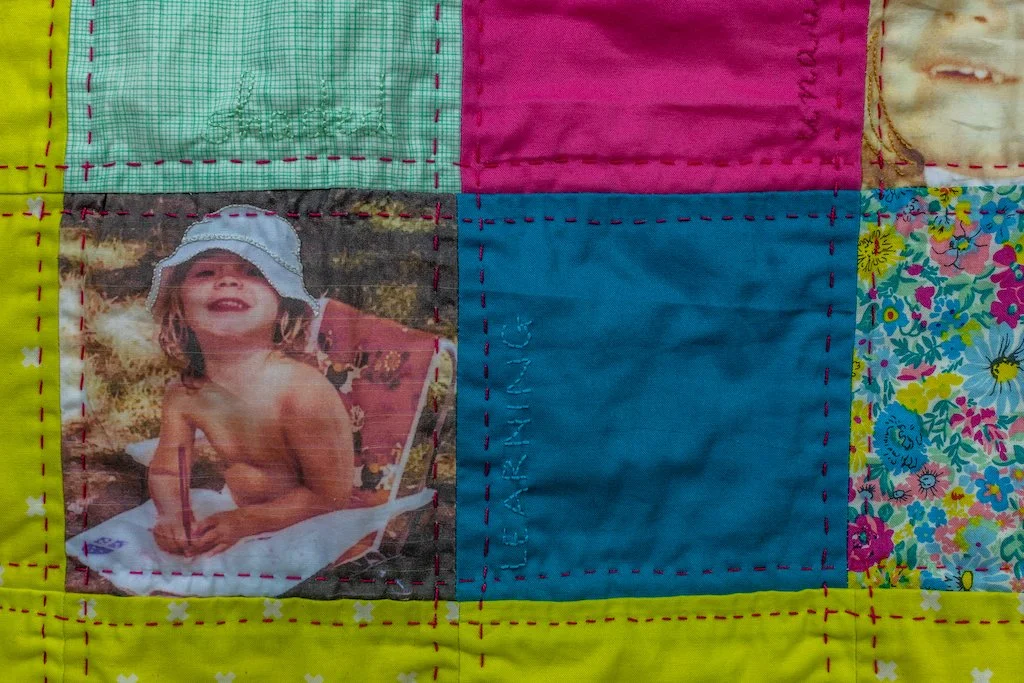
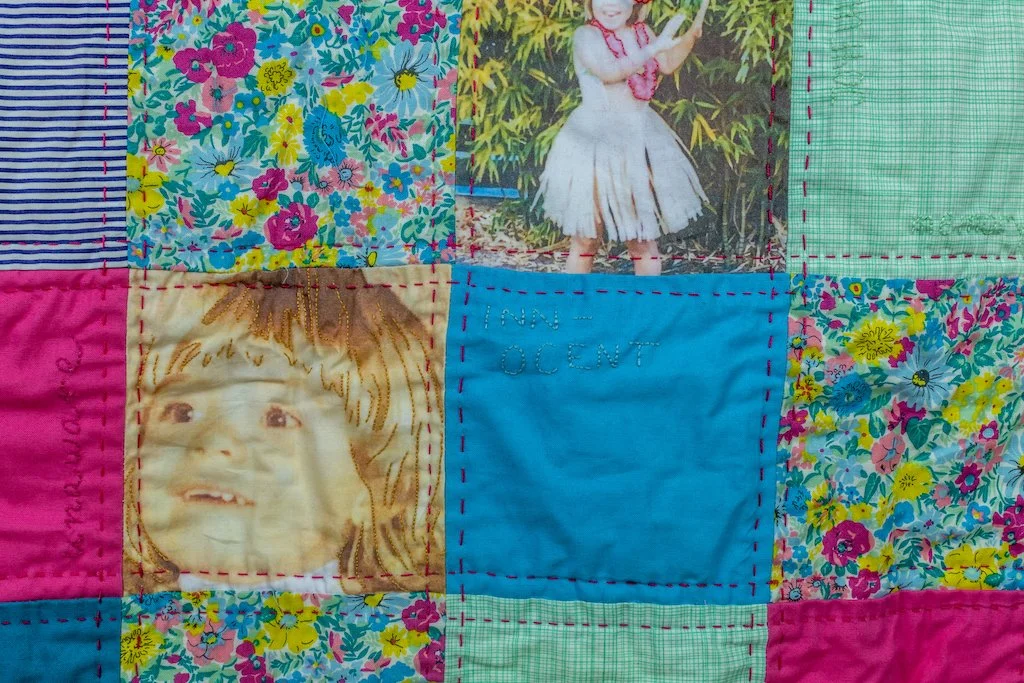
My PhD “Survival memories: How artistic representation and naming incest could challenge taboos, influence public discourse and ideologies, and contribute to social change through the history and tenacity of textiles” was completed in 2025 and the complete thesis can be found to download and read at http://researchonline.federation.edu.au/vital/access/HandleResolver/1959.17/209376.
‘Survival Memories’ is a practice-led investigation of how incest victim-survivors can influence public and political discourse through art, embodiment, and materiality, drawing on the history and tenacity of textiless as a medium for activism and social change. Incest is one of society’s last taboos, an unspoken atrocity with considerable human and societal costs, however, it is often omitted from discussions of gender-based trauma and sexual abuse. Informed by Feminist Standpoint Theory, this research is intended to become a mechanism to end the silence, through the con;nuous reciprocity of art practice and an interrogation of relevant conceptual frameworks. While the role of the artist has been to critique, inform change and contribute to consciousness-raising, the topic of incest has had a limited presence in contemporary visual art. We have also seen the intensification of violence against women and children. This research amplifies this issue, providing a visual lens to magnify my own experiences of incest and disassociation, while continuing to explore how textiles can be a vehicle for remembering, memorialising and agitating. While documenting and connecting with my own memories I explore the work of other creatives and delve into the role of memory, memorialising and trauma, exploring how art and artists can open a dialogue around incest and trauma. The role of textiles and textile practice as agents of change and tools of political agitation are embedded across the exegesis, drawing on key moments from textile history and how they can inform the future. My fascination with memory, combined with the softnesss of textiles, has seen me, through the process of the research, reconnect with the little girl I only know from photographs, creating a powerful memorial that honours her survival. Through extensive research and technical development, I have created a body of work that embraces a range of techniques including embroidery, samplers, hand quilting, banner making and patchwork. This research allows me to mourn the child I was and celbreate her survival, whilst simultaneously contributing contributing a new voice in research that demands a world that protects children from one of the most dangerous places on earth, the family home.
Photographer: David Bailey Photography https://www.davidbaileyphotography.com (funded by Creative City Ballarat)